
HSE confirms timetable for Building Safety Regulator transition

The Health and Safety Executive (HSE) has confirmed the timetable for transferring the Building Safety Regulator (BSR) to a new government body, marking the next major step in implementing the post-Grenfell building safety reforms.
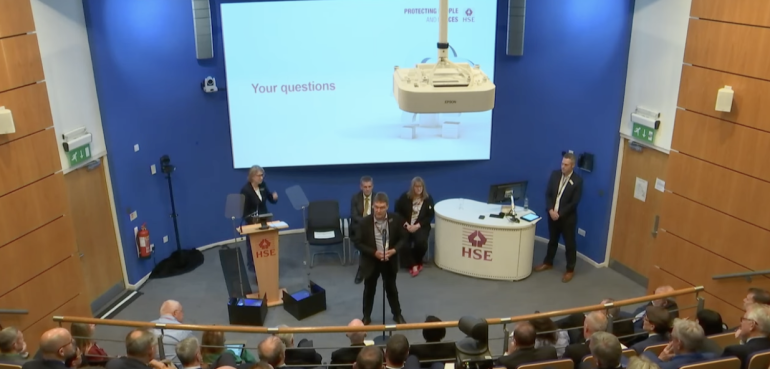
Speaking at the HSE’s Annual General Meeting on 29 July, Chief Executive Sarah Albon said the government intends to bring forward secondary legislation by December 2025 to formally transfer the legal responsibilities of the BSR from HSE to a new executive agency within the Ministry of Housing, Communities and Local Government (MHCLG).
The transition will not happen overnight. Albon described it as a “gradual process” taking place over “months and years,” with many existing HSE staff who currently work on BSR functions expected to move to the new agency. The HSE will also continue to provide certain corporate services to support the fledgling body during its early stages.
The BSR was established within HSE in April 2023 as part of the Building Safety Act, with responsibilities including oversight of the safety of higher-risk residential buildings, the competence of professionals, and the enforcement of building safety legislation.
The shift to MHCLG control is intended to embed these functions within the department responsible for housing policy, while retaining the regulator’s independence and specialist expertise.
What does it mean for building engineers?
The timetable signals an extended period of operational continuity, but also the prospect of changes in engagement and oversight processes as the new body takes shape.
1. Regulatory stability in the short term
Because the transfer to the new MHCLG agency won’t happen until after December 2025 and will take “months and years”, building engineers should not expect sudden changes to how they engage with the BSR. Current application processes, competence assessments, and regulatory oversight will remain in place for now.
2. Possible changes to communication and engagement
Once the new agency is established under MHCLG, the way building engineers receive updates, guidance, and enforcement notices could shift.
3. Longer-term alignment with housing policy
The move places the regulator closer to the government’s housing and construction policy teams. This could mean a stronger link between safety regulation and broader housing strategies—but it may also bring more political oversight, potentially influencing priorities, timelines, and areas of focus.
Bottom line
For now, it’s business as usual, but building engineers should keep an eye out for updates from both HSE and MHCLG in late 2025 and early 2026. Over time, the shift could change not just who you deal with, but how safety regulation integrates with the wider housing agenda. Building Engineer and CABE will continue to keep members updated.
Jobs

Permanent
Structural Engineer
Permanent
Managing Quantity Surveyor
Permanent
Quantity Surveyor-Civils
Permanent