

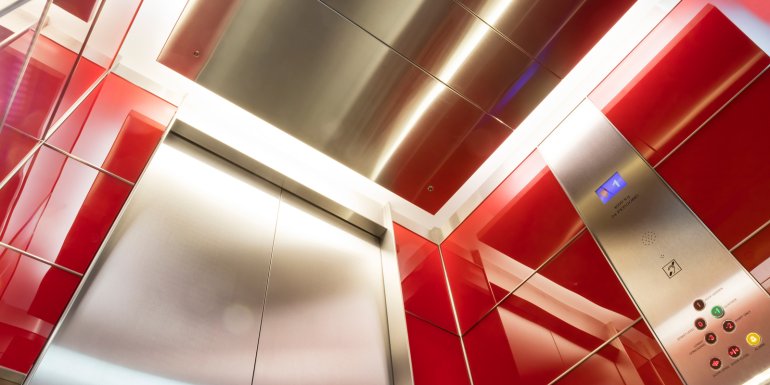
Building engineers are being urged to review refurbishment practices after reports emerged of older firefighting lifts being replaced with standard passenger lifts – potentially compromising fire safety and breaching legal duties.
A recent report to CROSS UK has highlighted a growing trend affecting lifts originally installed to standards such as BS 2655 and BS 5655. These lifts, many dating from the 1970s through to the early 2000s, are increasingly being stripped of firefighting functionality during upgrade works.
According to the report, refurbishment projects are seeing key features removed – such as fire service controls, recall systems, and protected operation modes – despite their continued role in supporting fire and rescue operations.
In real-world examples, including a 12-storey student accommodation block and a 14-storey specialist housing scheme, the removal of these functions left firefighters without mechanical access during incidents. Crews were instead forced to carry heavy equipment up multiple flights of stairs, increasing fatigue and delaying response times.
The issue raises significant concerns under UK fire safety law. Article 38 of the Regulatory Reform (Fire Safety) Order 2005 requires that facilities provided for firefighters are maintained in efficient working order. In parallel, the Building Regulations 2010 stipulate that refurbishment works must not worsen existing compliance.
Replacing a firefighting lift with a non-compliant passenger lift may therefore constitute a breach of both frameworks.
There are also implications under the Building Safety Act 2022, particularly for higher-risk residential buildings, where removal of fire service provisions could impact safety case compliance and certification.
At the heart of the issue is what experts describe as a widespread misunderstanding within the lift and construction sectors. Many contractors are reportedly dismissing older lifts because they do not meet modern standards such as BS EN 81-72.
However, specialists stress that legacy firefighting lifts can still be legally required and operationally critical, even if they fall short of current specifications. Basic features – such as recall and landing control isolation – continue to provide meaningful support to fire crews.
Engineers involved in refurbishment and modernisation projects are being advised to take a more rigorous and collaborative approach:
- Retain or enhance, not remove: Existing firefighting functionality should be preserved wherever possible, and improved during upgrades.
- Use appropriate standards: BS 8899:2016 provides guidance on upgrading older lifts while maintaining fire performance.
- Review original fire strategy: Lifts may form part of a wider fire safety design, meaning their alteration could have unintended consequences.
- Consult specialists: Input from competent fire engineers and local fire and rescue services is essential before making changes.
A call for cross-disciplinary awareness
Industry experts emphasise that lift modernisation is not purely a mechanical or electrical exercise. Decisions affecting firefighting capability must consider fire engineering, building control and operational response requirements.
The report concludes that improved awareness and clearer communication across disciplines are essential to prevent inadvertent safety risks. For building engineers, the message is clear: legacy firefighting lifts remain a vital part of many buildings’ fire strategies – and should not be removed without thorough, competent assessment.
Related Content


Jobs

Permanent
Senior Quantity Surveyor- Civils/ Power
Permanent
Quantity Surveyor

Permanent
Assistant Quantity Surveyor
Permanent