

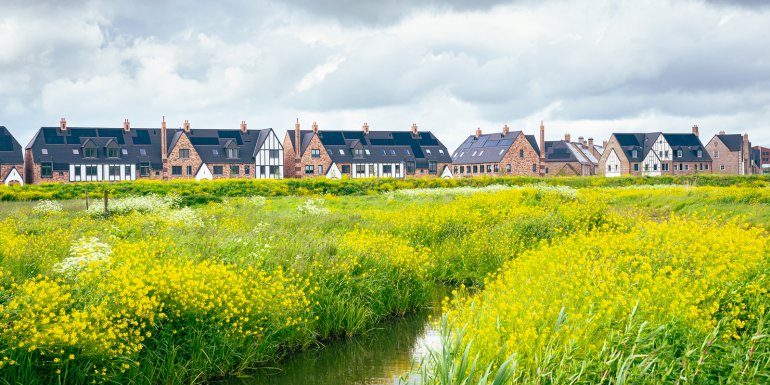
Infrastructure Minister Liz Kimmins has published the consultation report on Sustainable Drainage Systems (SuDS) in New Housing Developments, confirming strong industry support for integrating nature-based drainage solutions. The report, published on earlier this month (6 May), marks a significant step toward making nature-based SuDS features mandatory in all new residential schemes.
The public consultation received 46 responses and showed strong support for the Department for Infrastructure’s (DfI) proposed policy direction. The minister emphasised that the widespread implementation of nature-based SuDS is crucial for managing flood risk, tackling the challenges of climate change, and – critically for developers – limiting the impact of new projects on already stressed drainage networks across the region.
For building engineers, this policy means a confirmed shift from traditional piped systems to nature-based alternatives such as grassed swales, rain gardens, and detention ponds. These features are designed to hold, slow, and clean rainwater locally before it enters a river or sewer, offering environmental and amenity benefits alongside improved drainage performance. Integrating these solutions into future housing developments is expected to protect water quality, improve the performance of sewerage systems, and help reduce flood risk.
The policy is being driven forward by the Water, Sustainable Drainage and Flood Management Bill, which is currently progressing through the Assembly. This Bill is designed to provide DfI with the legislative powers to create regulations concerning the design, approval, operation, and maintenance of nature-based SuDS.
The immediate next step will be the further development of the detailed regulatory arrangements needed to deliver the SuDS policy. The DfI plans to consult later in 2026 on preferred options for key regulatory areas that will shape future projects.
Discussions among stakeholders have highlighted that while local authorities are considered best placed to lead on planning integration, technical approval of components connecting to the public network may be managed by NI Water. Furthermore, there are ongoing questions about long-term maintenance funding, with suggestions ranging from developer fees for transactional costs to public funding for core oversight, or models where NI Water handles sewer-like components and Councils manage green amenity features.
The full consultation report is available here.
Related Content


Jobs

Permanent
Senior Quantity Surveyor- Civils/ Power
Permanent
Quantity Surveyor

Permanent
Assistant Quantity Surveyor
Permanent