

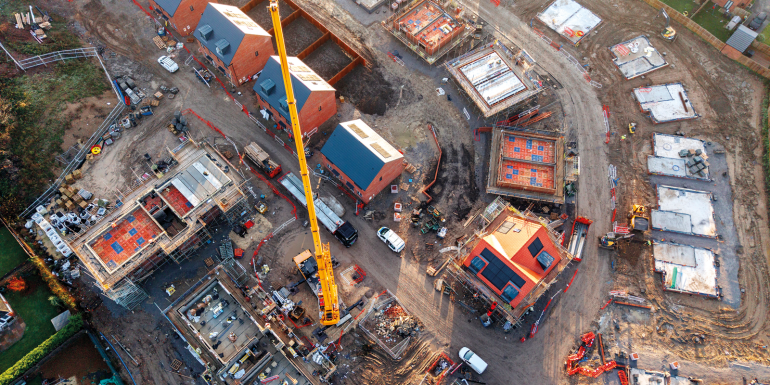
The proposed changes to landfill tax in England and Northern Ireland aimed to support environmental goals, but risked sabotaging housebuilding efforts, says BusinessWaste.
The government in Westminster spent 2025 consulting on proposals to drive more materials out of landfill and design out incentives for landfill tax fraud. These included transitioning to a single rate of landfill tax, reforming landfill tax exemptions and removing landfill tax reliefs.
Though there will continue to be a role for landfill for years to come, it is being seen as the bottom of the waste hierarchy and reducing its routine use is key.
What is landfill tax?
Landfill tax is currently charged at two different rates, depending on the material being disposed of: in 2025, the standard rate was priced at £126.15 per tonne; the lower rate was priced at £4.05 per tonne.
The lower rate is for ‘inert or inactive waste’, which covers building waste such as bricks, concrete, glass and soil. The lower rate was applied to these materials as they don’t undergo any significant physical, chemical or biological transformations and therefore are unlikely to produce harmful gases or leachate.
The proposed change?
In April 2025, the UK government consultation proposed reforming landfill tax for England and Northern Ireland and moving to a single flat rate to simplify the system, reduce fraud and better support environmental targets.
As part of the proposed reforms, the government planned to gradually increase the lower rate to match the higher rate. At the current pricing structure, this would have meant an increase of over 3,000% on inert or inactive waste.
Why is this an issue?
One industry that would have been hit hard is construction. Currently, a large proportion of construction waste falls under the lower tier and thus receives a greatly reduced rate of landfill tax. With landfill tax measured by weight, and with building materials and construction waste being particularly heavy, this reform would have led to to a substantial increase in costs for the industry.
Given the pressing issue of the UK’s housing shortage – some estimate 300,000 homes a year – there were grave concerns that this would have brought many housing projects to a halt. Or that the costs would have inevitably been passed onto consumers in the form of raised prices.
For example, under the proposed single-rate system for 2030, projected at £146 per tonne (inflated from £126.15 at 3% RPI), all site-generated waste would be liable at the standard rate, giving a total cost of approximately £24,820 per home.
How are the costs worked out?
Currently, estimates suggest that the average new build results in waste costs of £690, owing to the lower landfill tax rate.
- The estimated extra landfill tax cost per new build home is based on an average home size of 92m², according to the UK Housing Survey and Home Builders Federation.
- Construction material waste is assumed to be 15-30% of delivered materials, following guidance from Waste & Resources Action Programme on construction and demolition waste.
- Bulk excavation and inert spoil generated during foundations, footings and groundworks are estimated at 100-150 tonnes per home, based on typical construction site estimates for residential developments.
- Under the current landfill tax system, most of this inert waste is subject to the lower rate (£4.05 per tonne), resulting in an average cost of around £690 per home.
In its autumn 2025 Budget, the government announced that it would not be creating a single rate in England and Northern Ireland to avoid imposing unavoidable costs on businesses and undermining the government’s target of building 1.5 million new homes in England.
In response to the consultation, it will instead increase the rate of standard landfill tax from £126.15 per tonne to £130.75 per tonne and increase the lower rate from £4.05 per tonne to £8.65 per tonne (from April 2026).
The reasons for the increase in both rates are to incentivise minimising the amount of material sent to landfill and to support the use of non-landfill waste management options, such as recycling, composting and recovery.
Good practice
While cost is no longer such a pressing issue, it’s still good practice to reduce landfill waste as much as possible. This can be done by:
- Reducing waste at the source. Ensure all materials are accurately calculated at the ordering stage and use careful and efficient planning for building materials.
- Reusing any materials where possible and finding alternative uses for waste materials and offcuts, rather than sending these to landfill.
- Recycling any construction waste where possible. This may require better education on-site with clear labelling and signage to encourage recycling by construction workers.
BusinessWaste’s Graham Matthews says: “The problem is difficult to navigate, with the UK facing both a housing shortage crisis and diminishing landfill capacity. Any change that looks to divert waste away from landfill should be positive, but it’s hard to ignore the knock-on effect for the construction industry and the costs.
“We believe that reducing waste in the first instance is always the best solution. Better planning and education and using recycling streams are opportunities to do this. Nevertheless, it presents a unique challenge for the industry.”
Find out more at BusinessWaste.co.uk
For more on the UK government landfill tax announcement, visit b.link/GOV_landfilltax
Image credit | iStock
Related Content


Jobs

Permanent
Senior Quantity Surveyor- Civils/ Power
Permanent
Quantity Surveyor

Permanent
Assistant Quantity Surveyor
Permanent