

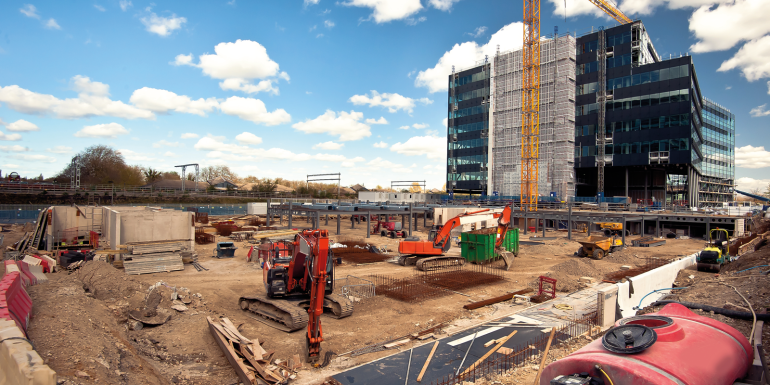
Mustafa Sidki, Partner at Thackray Williams LLP, says building engineers in England face increased litigation after the Grenfell Tower tragedy.
The Building Safety Act 2022 (England) was enacted to improve fire safety and provide rights for residents of higher-risk buildings (HRBs) following the Grenfell Tower fire. But if you thought its impact has been far-reaching so far, be prepared for an escalation of arising litigation.
We are seeing an exponential increase in retainers from leaseholders to obtain Building Safety Certificates from the designated Building Safety Regulator (BSR), or to secure government funding via remediation grants to replace unsafe cladding or remedy safety defects.
Also rapidly growing in number are applications for Remediation Orders or Remediation Contribution Orders to remedy historic building safety defects from the First-tier Tribunal, under Sections 123 and 124 of the Act.
Many leaseholders are being prompted to act from the frustration of being unable to sell their property until building defects or unsafe cladding are made good – encouraged by the first wave of tribunal rulings, as well as the shortfall between government grants and total remediation costs. Empowered by the Act’s mandate of transparency and enhanced safety measures, leaseholders are also seeking professional advice to ensure HRBs meet safety standards.
CABE’s Competency Frameworks
CABE is committed to raising professional competency across the built environment. Its membership Competency Frameworks outline the expectation of competence against each grade of membership and provide a clear structure for accurately measuring the necessary competencies of CABE members. This ensures they have the necessary expertise and knowledge to meet the high expectations the industry demands of them.
For more, visit b.link/CABE_competency
Knowledge and skill in demand
The predicted property litigation surge could be considered a double-edged sword for building engineers. On the one hand, there will be an increase in instructions for building engineers to undertake inspections and scrutinise schematics to provide vital expert technical evidence to identify and particularise remedial action and measures required. However, a building engineer undertaking these inspections will themselves attract potential liability and will need to ensure that they have in place the quality assurance procedures necessary to protect themselves from future litigation.
Engineers’ services will also be required for applications to obtain Building Safety Certificates from the BSR and for funding in the form of remediation grants from the Department for Levelling Up, Housing and Communities’ Building Safety Fund. Building engineers can also expect to be consulted for applications for remediation orders under section 123 of the Act or remediation contribution orders under section 124 of the Act.
On the other hand, the increased scrutiny of schematics and the increase in inspections of buildings being undertaken are also increasing the discovery of latent defects in premises attributable to defective design, defective materials or defective supervision in construction or installation – albeit, that they likely met the design and material standards existing at the time of construction.
If latent defects arise as a result of negligent design or construction, the freeholder can sue under the building contract and/or professional appointment contracts for breach or negligence in the design as the contractor or professional has, in law, assumed a duty of care to them.
The Defective Premises Act 1972
is an act to impose duties in connection with the provision of dwellings and otherwise to amend the law of England and Wales as to liability for injury or damage caused to persons through defects in the state of premises. The Act covers the duty to build dwellings properly and duties related to work/remediations to the property.
Duties relating to work to dwellings applies where a person, in the course of a business, takes on work in relation to any part of a relevant building.
The person owes a duty to –
(a) the person for whom the work is done, and
(b) each person who holds or acquires an interest (whether legal or equitable) in a dwelling in the building, to see that the work is done in a workmanlike or (as the case may be) professional manner, with proper materials and so that as regards the work the dwelling is fit for habitation when the work is completed.
For more, visit b.link/GOV_DPA1972
Defects coming to light
If latent defects are uncovered during an inspection, other legislation will become applicable in determining the liability of the professionals responsible for the construction of the building.
The Defective Premises Act 1972 (England and Wales) applies to work for or in connection with the provision of a dwelling (Section 1). It also applies to work by someone in the course of a business, such as a property developer, to any part of a ‘relevant building’, which means a building containing at least one dwelling, such as an apartment block (Section 2A, inserted by the Building Safety Act 2022).
Under the Defective Premises Act 1972, the work must be done in a professional manner, with proper materials, so that the dwelling is fit for habitation when the work is completed.
This begs the question: what constitutes ‘fit for habitation’? Unhelpfully, the 1972 legislators did not think to define this. However, poor damp-proofing, a defectively designed roof and defectively designed foundations have all led to successful claims.
If a successful claim is brought for latent defects that render a building unfit for habitation, the claimants may be able to claim not just for damage to property, but also for economic loss. Successors in title to the original owner can claim.
There are provisions limiting the period during which claims may be lodged against inherent defects. Key here is whether the work was completed before or after 28 June 2022. If the work was finished before this date, a 30-year limitation period applies for section 1 claims. However, for projects concluded after 28 June 2022, the limitation period for claims accruing under section 1 or section 2A has been halved to 15 years.
Defending litigation claims can be both expensive and time-consuming. It may therefore be more prudent to seek to reach a pragmatic agreement with claimants to enable all parties to minimise costs and move forward. In either case, expert legal advice should be sought.
The Building Safety Act 2022: b.link/GOV_BSA2022
Mustafa Sidki is a Partner at Thackray Williams, where he specialises in litigation and dispute resolution. Additionally, Sidki handles commercial disputes involving breach of contract and shareholder disagreements.
Image credit | Shutterstock
Related Content

Jobs

Permanent
Senior Quantity Surveyor- Civils/ Power
Permanent
Quantity Surveyor

Permanent
Assistant Quantity Surveyor
Permanent