


York Minster, the world-famous Gothic cathedral, has achieved significant energy and cost savings following the installation of solar panel systems.
When an 800-year-old cathedral embraced solar power, it was game-changing. In the first six months since commissioning, the 184-panel array has generated more than 42,000kWh of clean electricity, met over 80% of York Minster’s energy needs at peak, saved nearly £20,000 in electricity costs and offset eight tonnes of CO₂ emissions.
The installation on York Minster is part of the Neighbourhood Plan, the strategy by the Chapter of York (the governing body overseeing York Minster and its wider seven-hectare estate) to decarbonise its estate. This includes more than 50 buildings ranging from residential homes and commercial properties to nationally significant heritage assets. As one of several projects under this plan, it contributes to a growing portfolio of solar installations across the estate that collectively generate more than 120,000kWh of clean energy each year.
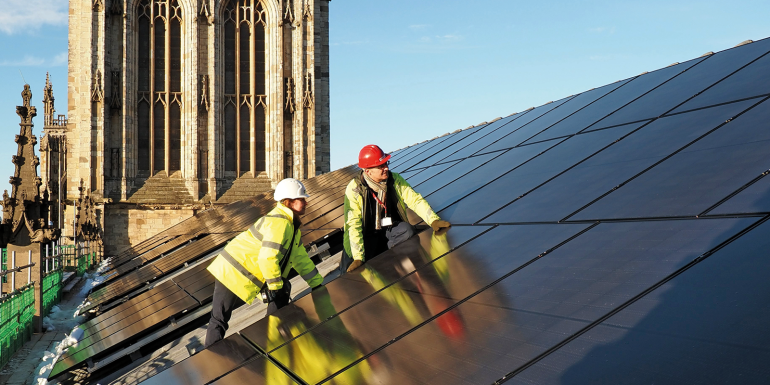
However, for a building with a history of rooftop fires – including a devastating lightning-induced blaze in 1984 that caused millions of pounds of damage and took four years to repair – fire safety is a priority too.
“This is an incredibly important building. It’s the symbol of this great city, the largest Gothic cathedral north of the Alps, so it has huge international significance. However, it is also a building with an unfortunate history of fire,” explains Alex McCallion, Director of Works and Precinct for the Chapter of York. “We worked very closely with our insurance company EIG to reassure them, and us, that we were able to address the possible risk to the fabric of this beautiful building [by installing solar].”
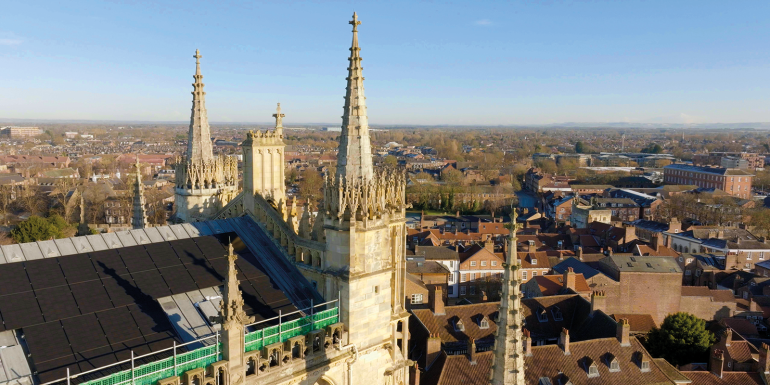
In the first six months since commissioning, the 184-panel array has generated more than 42,000kWh of clean electricity.
Monitoring systems
Installer Associated Clean Technologies designed the system with SolarEdge technology. It included ‘Power Optimizers’ installed beneath the solar panels, enabling each panel to operate independently. This ensures that, unlike conventional solar systems, if any panels are shaded by the Minster’s complex rooftop architecture – including pinnacles and towers – then any drop in output is limited only to the affected modules, maintaining consistent and high overall energy production.
In addition, the technology was designed to reduce electrical and fire risks in solar installations, with a feature designed to automatically reduce high-voltage DC current at the panel level to touch-safe levels when the inverter or grid is shut down. This dramatically lowers the risk of electrical shock, allowing emergency responders or maintenance teams to safely access the roof.
The system also continuously monitors for abnormal heat build-up at the connector level – an early indication of potential faults. If excessive heat is detected, the system can automatically prevent an electrical arc from forming.
The installation includes a ‘Firefighter Gateway’ that is wired into the building’s fire alarm system. This allows the entire solar array to be shut down quickly – either manually or automatically – giving fire crews control of the system during an emergency and ensuring the roof can be accessed safely and without delay.
The efforts to decarbonise the estate and reduce costs have meant those responsible for the buildings placing their faith in solar panels. However, the fire safety systems bring assurances for those who have to rely on more than faith.
For more on SolarEdge’s products and safety systems, visit solaredge.com
Related Content
Jobs

Permanent
Senior Quantity Surveyor- Civils/ Power
Permanent
Quantity Surveyor

Permanent
Assistant Quantity Surveyor
Permanent