

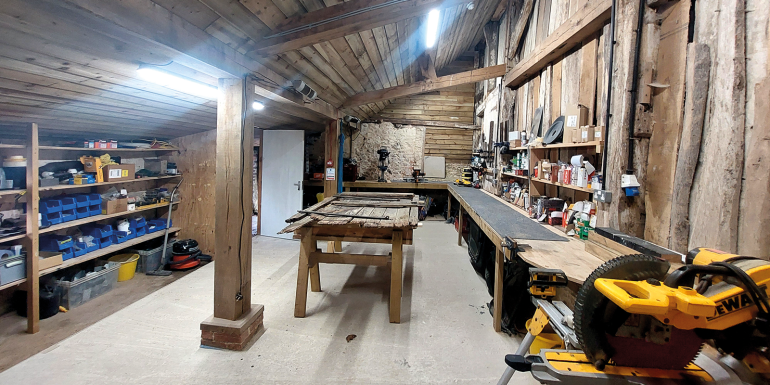
Conservation contractor DBR has opened a heritage training facility to preserve traditional building crafts for future generations, Executive Director Adrian Attwood explains.
At 9am on 26 June 2025, UK conservation specialist DBR (London) Limited proudly opened the doors of its new Craft Skills Education Centre. Developed from a set of disused barns in the South Downs National Park, the centre operates as both a training facility and a fully working historic building conservation space, providing real-world experience for learners. This dual approach of offering traditional craft skills education while delivering joinery and masonry conservation services to clients ensures students gain practical skills in an authentic environment.
Featuring a purpose-built lecture theatre alongside specialist masonry and joinery conservation workshops, it has a range of different services: NVQ training for heritage craftspeople, including stonemasons, joiners, conservators, stone cleaners and more; heritage introduction taster days for local schools and colleges; and CPD seminars for practising professionals and associated trades.
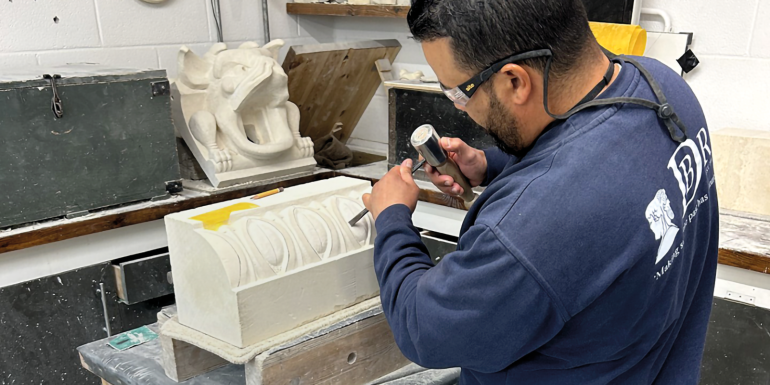
DBR is well known for its in-house craft trades – it is a founding member of the Historic England Skills Forum and a Royal Warrant-holding company. Its craftspeople work on some of Britain’s most iconic buildings, including listed buildings, scheduled monuments and World Heritage Sites, as well as parochial churches, country estates and modest memorials. These are structures that will be appreciated for centuries, plus heritage crafts offer fulfilling careers with excellent earning potential. Yet we have created a cultural bias against practical work, where it is seen as ‘second best’ to a university degree.
Tackling the skills gap
The education system bears much of the responsibility, pushing academic routes almost exclusively. This means young people leave school with little understanding of rewarding careers in stonemasonry or leadwork. The impact of this skills crisis affects architects, specifiers and planning professionals, who increasingly struggle to find craftspeople capable of delivering heritage projects to the required standard.
Modern conservation work is extraordinarily complex, involving interpreting historical records, selecting appropriate materials and applying traditional techniques while ensuring structural integrity in live environments.
Schools need to promote vocational careers with the same enthusiasm they reserve for universities. Industry must invest in training and the government should support initiatives that preserve these vital skills.
Engaging the next generation of built environment talent is vital. Every cathedral spire, every historic timber frame and every piece of carved stonework depends on skills that risk being lost forever. This special new space will aim to address that persistent narrative as part of our armoury in educating the next generation of craftspeople. The Craft Skills Education Centre embodies our motto of ‘making sure the past has a future’. We’re creating a space in the picturesque South Downs where the craftspeople of tomorrow – from stonemasons and joiners to conservators and heritage technicians – can learn and be inspired, leaving with the knowledge they need to ensure our built heritage endures.
More on the centre’s workshop programme is available here.
Related Content


Jobs

Permanent
Senior Quantity Surveyor- Civils/ Power
Permanent
Quantity Surveyor

Permanent
Assistant Quantity Surveyor
Permanent