

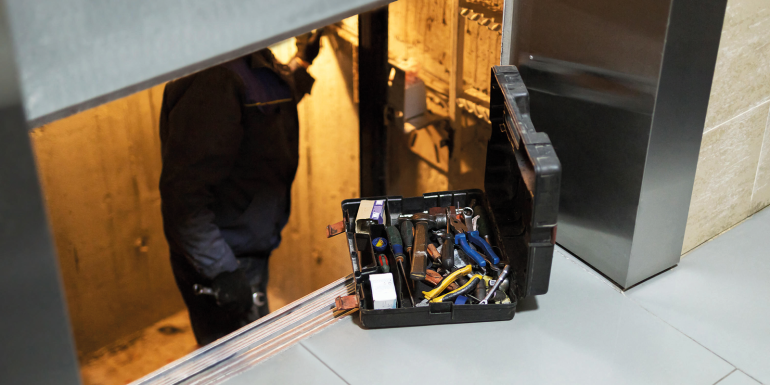
PEW Electrical calls for unified action to address growing skills shortages and fragmented training pathways in the lift industry.
With the construction and engineering sectors facing a need to recruit 25,000 additional workers per year by 2028 (according to the Construction Industry Training Board’s Construction Skills Network Report), the lift industry is calling for action to revolutionise training pathways and create opportunities to attract new talent.
Amid rising safety and compliance demands, sector-wide skills shortages are stalling both new build and retrofit projects, causing concern around delivering on targets and ensuring occupant safety. According to research, skills deficiencies are most pronounced in fire safety (33.5%), Building Safety Act (BSA) compliance (32%), product assurance and traceability (28%), and sustainability (22%).
The research (100 construction industry professionals working across commercial, residential and industrial construction sites were surveyed specifically about lift engineering) revealed that 55% of professionals attribute shortages to insufficient apprenticeships and career opportunities, while 53% point to fractured training as the primary upskilling barrier. Negative lift industry perceptions exacerbate the issue, with 54% seeing this as a key retention obstacle and 41% linking poor perceptions to recruitment difficulties.
The gaps, driven by fragmented training provision and limited career pathways, threaten regulatory adherence under the BSA, with one in five professionals citing training and competency as the biggest challenge, and 23% highlighting accountability issues in the Golden Thread of building safety. Further to this, 18% of respondents think that, currently, lift engineers are poorly prepared to ensure compliance.
However, the shortage of engineers is not specific to the lift industry. It mirrors broader construction trends where workforce numbers have declined sharply and the demand for skilled tradespeople, particularly in specialised areas, remains urgent to meet growing safety and compliance expectations.
Rising demands
Jason Clark, Engineer at PEW Electrical, says: “The shortage of skills in engineering needs to be addressed quickly and systematically. The UK’s infrastructure and retrofit ambitions require government and businesses to create pathways, embrace young talent and shift perceptions to showcase the diverse opportunities that our fantastic industry has to offer.”
While the lift sector faces significant challenges when it comes to skills and meeting evolving regulations, many professionals feel that progress has been made. 58% of respondents said that their entire supply chain has embedded new processes to support competent lift design and installation, and 57% said they are confident that lift design standards (such as BS EN 81 series) align with new building safety expectations. Moreover, 26% of respondents said that they now employ a vertical movement consultant for more complex projects to ensure compliance and performance of the system.
“The industry cares about ensuring best practice, that’s for certain,” says Clark. “But we need to both upskill current teams and create more opportunities for young tradespeople and engineers. Part of addressing this is promoting how rewarding a career in engineering can be, which means it’s not just down to the government, it’s down to us.”
PEW Electrical is calling for unified efforts to enhance training frameworks, improve industry perception and develop structured career pathways to secure the future of lift engineering and safeguard building safety.
Find out more, visit pewelectrical.com
Image credit | Alamy
Related Content
Jobs

Permanent
Senior Quantity Surveyor- Civils/ Power
Permanent
Quantity Surveyor

Permanent
Assistant Quantity Surveyor
Permanent