

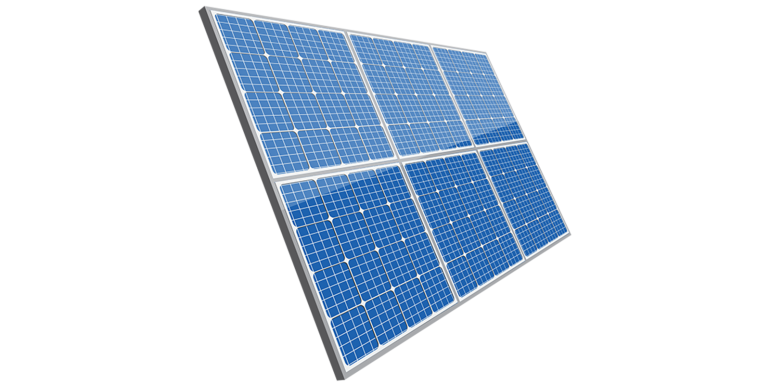
Adrian Simmonds, Practice Leader for Property Risk Solutions at QBE Insurance, strikes a cautionary note on the UK government’s ‘rooftop revolution’ in solar power.
The Future Homes Standard announcement in March set out new rules to ensure the majority of new homes in England will be fitted with solar panels. It’s something that is giving insurers pause. With the rapid adoption of lithium-ion batteries in new solar panel installations, there is growing concern of fire risks, especially when units are installed in spaces that are difficult to access in an emergency.
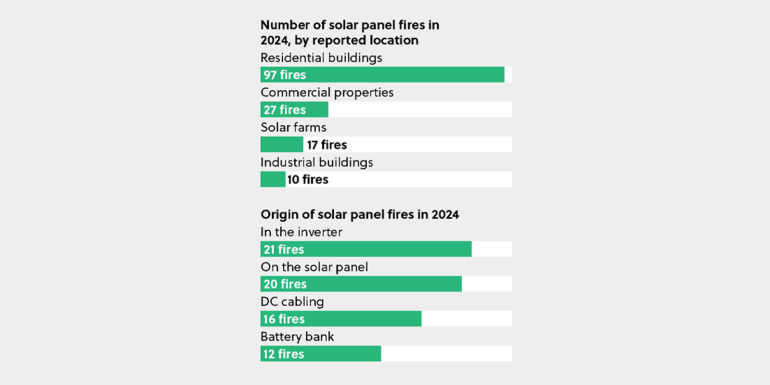
QBE collected data from Freedom of Information (FOI) requests to UK fire services in 2025, which showed UK fire brigades are tackling at least three lithium-ion battery fires a day. And in November, it published comprehensive FOI data on solar panel fires, which revealed that UK fire services in 2024 tackled a solar panel fire every two days – rising faster than the rate of installations.
Safety first
In December 2025, the government published guidance on the fire safety implications of installing photovoltaic (PV) systems, reviewing experimental evidence, incident data and existing regulatory approaches. Researchers investigated how PV systems installed on roofs influence fire dynamics, introduce additional risks for roof constructions and affect firefighting operations. (It’s important to note that in January 2026, the revised BS ISO 3941:2026 introduced a dedicated fire classification for lithium-ion batteries and the need for a different approach to fire risk management. In April, the IET BS 7671 wiring update specifically covered battery system storage safety.)
The inverter is the hardest-working component in a solar panel system, prone to failure if installed incorrectly or poorly maintained. It generates significant heat, meaning poor ventilation, dust build-up or blocked cooling systems can quickly elevate fire risks.
The issue isn’t confined to residential buildings. Under the Clean Power Action Plan, the UK aims to generate enough clean electricity to meet its annual demand by 2030, accelerating deployment from 18GW to 45-47GW. In particular, the plan aims to increase rooftop capacity on commercial buildings, warehouses and industrial buildings. Around 20% of the UK’s largest warehouses alone can provide 75 million square metres of roof space, which is estimated to support around 15GW of rooftop solar capacity.
Solar technology then is an essential part of the UK’s clean energy transition, but the rapid pace of deployment is cause for concern for risk management. Formal risk assessments, certified solar panel installation and maintenance are essential to reducing fires. In addition, building engineers are urged to consider the location of the battery storage in new domestic and commercial systems. Additional fire risks are introduced when units are installed in lofts, airing cupboards or upper-floor spaces that are difficult to access in an emergency, limit inspection and cleaning and increase the likelihood and potential severity of fires.
Read more at b.link/QBE_batteries
For the 2025 FOI data go to b.link/Guardian_battery
Image credit | iStock
Related Content

Jobs

Permanent
Senior Quantity Surveyor- Civils/ Power
Permanent
Quantity Surveyor

Permanent
Assistant Quantity Surveyor
Permanent