

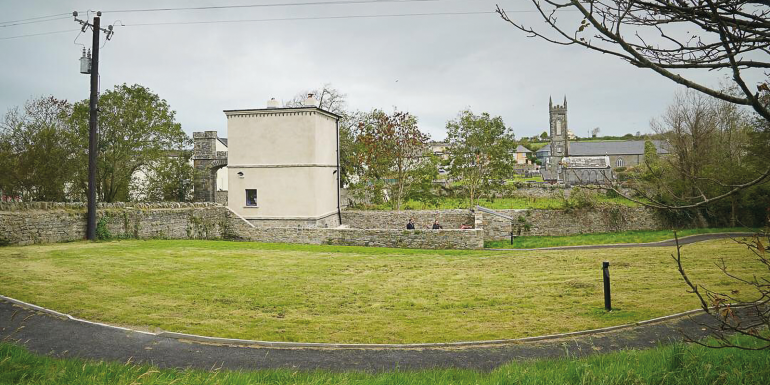
Winner: Architectural Conservation Professionals for Turret Lodge, Co. Clare, Ireland. This derelict building has become a functioning centre for historical and genealogy family studies for the west of Ireland
Quality
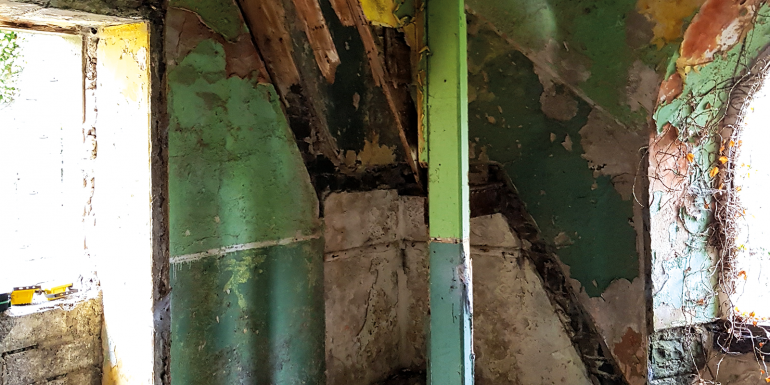
Home to the Vandeleur family since 1749, the Kilrush House estate had fallen into disrepair over the years; the main house burnt down in 1897 and the lands were taken over by the state in 1910. Turret Lodge, built in 1845, had lain empty since 1990 and had been used for antisocial behaviour. The lodge’s first floor had evidence of both fire and water ingress that had evolved into wet rot; this made the first floor unsafe and unusable.
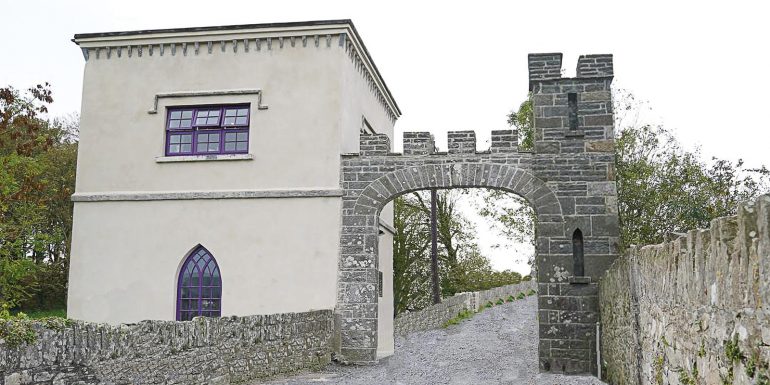
The building itself is quite small, with a floor space of 20m². But despite its small size, buildings such as Turret Lodge can be restored and brought back into use for the local community. A detailed feasibility study completed by Architectural Conservation Professionals (ACP) in partnership with local historical societies provided evidence that the derelict building could be converted back into a functioning historical centre; this study was used by Clare County Council to successfully apply for a Heritage Council grant.
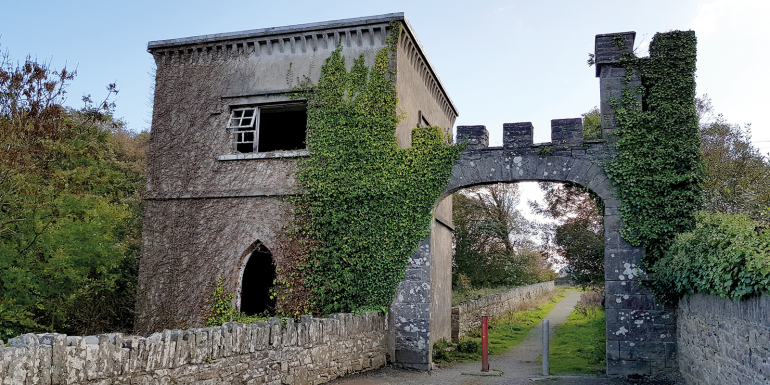
During the removal of the cement-based mortar, a cut-stone parapet detail at roof level was discovered, and the removal of vegetation from the entrance gate revealed additional features and issues that needed to be resolved. While the existing footprint of the building was small, the quality of the design meant there was no wasted space, and disability access of 60m² was able to be created. The project design also included the garden area; provisions for outdoor community events included an accessible area, power and water facilities, and storage.
The key quality of this project design was not just the restoration of Turret Lodge, but the history of the site; this building can be used for generations to come.
Impact
Turret Lodge was a derelict building for a number of years and had a negative impact on the local area. Not only did the restoration work aid the building by ensuring it was weatherproof and suitable for use again, the restoration of the yard area has opened up many additional possibilities for the local community. All works carried out, such as a ramp for wheelchair access, have ensured that the building and grounds can be accessed by all.
Sustainability
Project participants
Client: Clare County Council
Architect, building engineer, client representative and project manager:
Nancy O’Keeffe
Quantity surveyor: Martin English
Conservation surveyor and engineer:
David Humphreys
Feasibility study and design:
ACP Architectural Conservation Specialists
Inclusivity
Local community groups and the council were consulted at the design stages. ACP reviewed all proposed developments within the area, including the local development plans and greenway plans.
As Turret Lodge is a two-storey over-basement building, a new rampway to basement level was installed, making it accessible for all. This also ties into local development plans that aim to install a cycle track in the area and the use of the site as a hub or base.
The original plan was to install a washroom and toilet facilities on the basement level; however, as the site is subject to flooding (as was discovered during the construction stage), the toilet facilities had to be installed on the building’s first floor. A staircase was designed and installed according to disability access guidelines following conversations with the local council and building control officers.
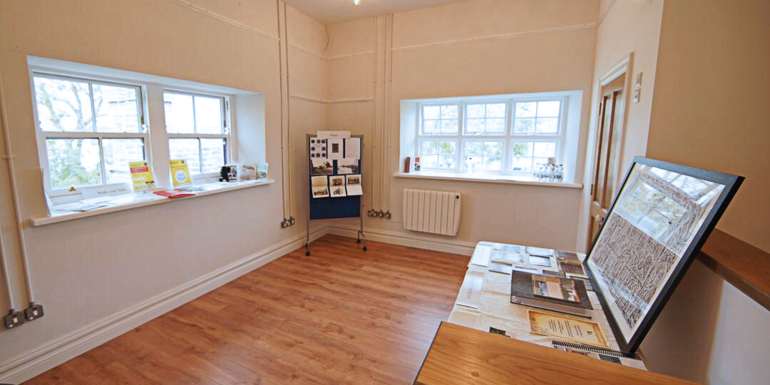
The upper fl oor of Turret Lodge, which was formerly unsafe and unusable (left ), is now a local history centre
Fire engines are not able to access the site as the low archway of a local bridge does not allow them to pass underneath. Following discussions with the local fire department, a fire protection strategy was put in place. This was just as well because the building was broken into during the construction stage and set on fire. Thanks to the fire protection strategy, no major damage occurred to the structure.
“The refurbishment is built on the principle of restoring a town centre protected structure and bringing it into wide community use. This initiative empowered a local community, providing them with a space which they will be responsible for while also delivering on the conservation of an important historical building,” said Helen Quinn, Conservation Officer, Clare County Council. “The project was the catalyst for a community group and Clare County Council to use public funds to invest in the local community, [delivering] a valued, viable heritage-based building while also increasing the cultural heritage tourism offering of Kilrush town. [The project provides] a valuable template and will inform and guide further development in Kilrush in a positive and meaningful way.”
CABE comments
The Preservation and Conservation award recognises the work in this sector and demonstrates how building engineers are helping to protect the built environment’s heritage. The winning project is a story of a building that was subjected to neglect, antisocial behaviour and wet rot. The conservation team worked dedicatedly to preserve this once-loved building into a point of cultural interest and community enjoyment as well as encouraging the conservation of further buildings of similar potential. Chartered Building Engineers Nancy O’Keeffe, David Humphreys, Simon Collins, Martin English and their ACP colleagues were involved in every part of this project from the initial engagement to site handover, ultimately delivering a truly outstanding result.
For more, visit bit.ly/CABEAwardWinners
Image Credit | ACP
Related Content

Jobs

Permanent
Senior Quantity Surveyor- Civils/ Power
Permanent
Quantity Surveyor

Permanent
Assistant Quantity Surveyor
Permanent